














































































































































































.jpg)




























































































































































































































































































































































.jpg)
.jpg)
Lorem ipsum dolor sit amet consectetur adipisicing elit. Minima quam aperiam ullam.
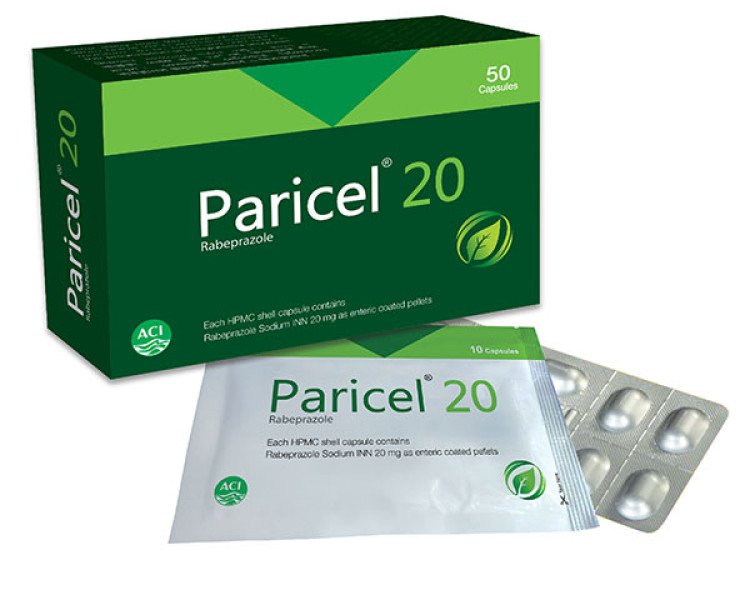
Paricel 20
Generic
Rabeprazole Sodium
Indications
Rabeprazole sodium (Paricel®) is indicated for the treatment of:
- Healing of erosive or ulcerative Gastroesophageal Reflux Disease (GERD)
- Maintenance of healing in erosive or ulcerative GERD
- Prevention of relapse in GERD
- Treatment of symptomatic GERD
- Healing of duodenal and gastric ulcers
- Eradication of Helicobacter pylori to reduce the risk of duodenal and gastric ulcer recurrence
- Treatment of pathological hypersecretory conditions, including Zollinger-Ellison syndrome
Pharmacology
Rabeprazole sodium (Paricel®) is a proton pump inhibitor (PPI) that reduces gastric acid secretion by inhibiting the H+, K+-ATPase enzyme on the surface of gastric parietal cells, effectively blocking the final step of acid production.
Dosage & Administration
-
Active Duodenal Ulcer and Benign Gastric Ulcer: The recommended dose is 20 mg once daily in the morning. Most patients with active duodenal ulcers heal within 4 weeks, though some may require an additional 4 weeks of treatment. Patients with active benign gastric ulcers typically heal within 6 weeks, but an additional 6-week treatment may be needed for complete recovery.
-
Erosive or Ulcerative GERD: A 20 mg oral dose once daily for 4 to 8 weeks is recommended.
-
GERD Maintenance: Long-term management of GERD can be achieved with either 10 mg or 20 mg of rabeprazole once daily, based on the patient's response.
-
Symptomatic GERD (without esophagitis): A 10 mg dose once daily is recommended for patients with moderate to severe symptoms. If symptoms persist after 4 weeks, further evaluation is required. Once symptoms are controlled, an on-demand regimen of 10 mg daily may be used as needed.
-
Zollinger-Ellison Syndrome: The starting dose is 60 mg once daily, which may be adjusted up to 120 mg per day based on patient needs. Doses over 100 mg should be split into two doses (e.g., 60 mg twice daily). Treatment duration should follow the physician’s guidance.
-
Helicobacter pylori Eradication: For patients infected with H. pylori, a combination therapy is recommended: 20 mg of rabeprazole twice daily with amoxicillin 1g twice daily and clarithromycin 500 mg twice daily for 7 days.
Rabeprazole tablets should be taken whole in the morning before meals. They should not be chewed or crushed to ensure proper absorption and efficacy.
Interaction
Rabeprazole strongly inhibits gastric acid secretion, which may affect the absorption of drugs that are pH-dependent. For example, when used with antifungal agents like ketoconazole or itraconazole, the absorption of these drugs may decrease, requiring dosage adjustments. There is no interaction with liquid antacids. PPIs like rabeprazole should not be co-administered with atazanavir due to its pH-dependent absorption.
Contraindications
Rabeprazole is contraindicated in patients with known hypersensitivity to rabeprazole sodium or any of its components. It is not recommended for use during pregnancy or breastfeeding.
Side Effects
Rabeprazole is generally well-tolerated in both short- and long-term studies. Possible side effects include:
- Common: Headache, diarrhea, abdominal pain, constipation, dry mouth, nausea, vomiting, dizziness, and muscle pain.
- Less common: Changes in appetite, drowsiness, and sleep disturbances.
Pregnancy & Lactation
Rabeprazole is classified as a Pregnancy Category C drug by the FDA. Animal studies have not shown evidence of impaired fertility or fetal harm, but there are no well-controlled studies on pregnant women. Since rabeprazole may be excreted in human milk, a decision should be made to either discontinue the drug or stop breastfeeding, depending on the importance of the medication to the mother.
Storage
Store below 30°C in a dry place, protected from light.



.jpg)
.jpg)
.jpg)
.jpg)
.jpg)
.jpg)
.jpg)
.jpg)
.jpg)
.jpg)
.jpg)
.jpg)
.jpg)
.jpg)
.jpg)